There isn’t really much about this photo that relates to food. Nothing at all, in fact. I shot this on my first morning in Havana. I was there with my dad. He wanted to see the Panama Canal and when I looked around to see where else we could go (nothing personal, Panama, but aside from beaches there wasn’t much to see in Panama except the Canal) I noticed Cuba wasn’t too far away.

I’m from Canada, so going to Cuba is no big deal. We flew from Toronto to Havana, stayed for a few days; flew to Panama, saw the Canal, came back to Havana and stayed a few more days and then went home. Great trip.

This is (ostensibly) a food blog. So, I guess I better talk about the food. Actually, first I’ll mention that this shot was taken with a Fujifilm x100 and I have a good friend who has a couple of Studebakers. I saw this, thought of Steve and snapped away.

Right, food. Cuban food was actually (in 2012) much better than I expected. With the exception of one meal where my chicken skewer was totally undercooked we had routinely pretty tasty food. From breakfast in the Casa Particulaire (thanks, again, Maura) to dinner at the Cafe Florida where there is a statue of Hemingway holding up one end of the bar, the food was pretty good. Sometimes marginal, often good and a couple of times, great.

When I was researching our trip I read again and again how awful the food was. I guess it all depends on your point of view. The food in Cuba was actually better than the food in Russia, but there might be a few reasons for that one.

I wasn’t expecting much, really. And I was more than adequately rewarded and surprisingly impressed.
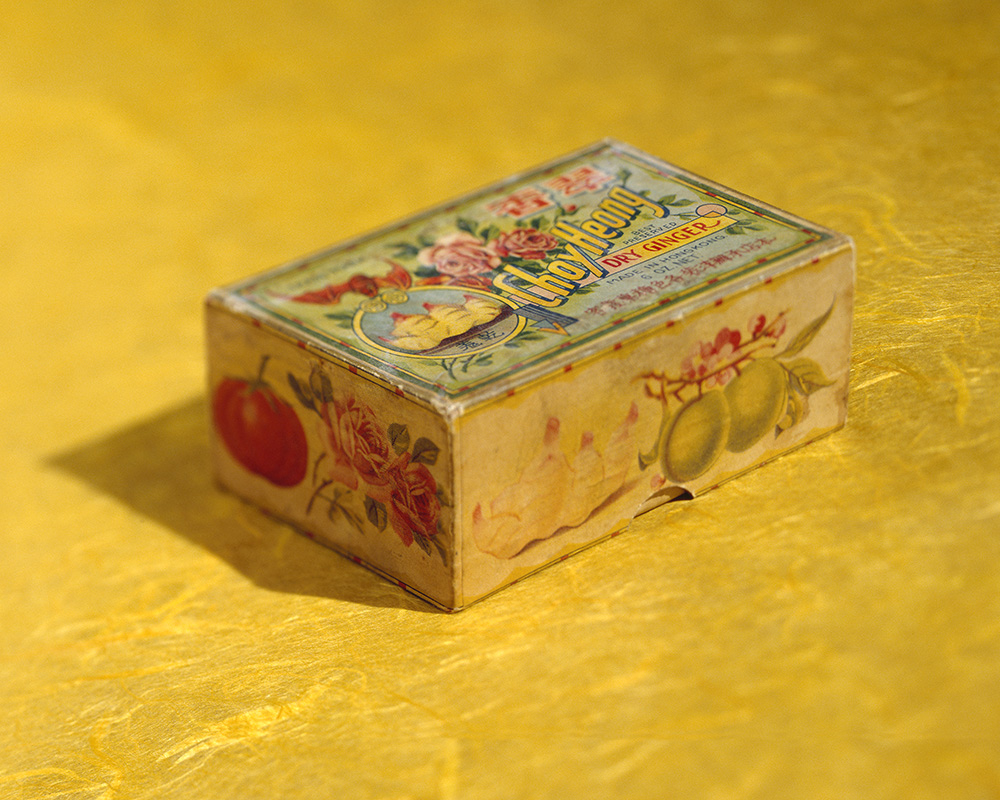
From the basement of my parents’ house. I think it contained brass rivets by the time I found it

My mother is going to kill me for this.

Well, she’s actually more forgiving than that, thank goodness. One of my major fears is that in writing about my food habits, I’m going to paint her as a poor parent. She certainly had her strengths and weaknesses. We all do. One of her lesser strengths was her cooking.

Her organizational abilities have saved me in the kitchen countless (and I mean countless) times.

But on to ginger, because of course that’s where I’m obviously going.

Lots to unpack. Let’s start with the box in the photo above. It sat in my childhood home on a shelf, filled with brass rivets, I believe. It was there when my folks bought the house in 1974 and I grabbed it when I finally developed a sense of style and I needed something to photograph with my new camera. This was the first thing I photographed on 4×5 film. I did it in black-and-white and in colour, but the BW is not nearly as interesting.

I’m delaying the obvious. Ginger and I have a strange relationship. I never really gave it much thought until one day while eating a stir fry for dinner, I bit into a solid disc of ginger. Rather than grate it or chop it or do anything that would make the ginger smaller, my mom sliced it into rounds and put it into the stirfry as you would drop cordwood on a campfire.

I remember my eyes watering and my mouth being set on fire. I also remember being told that I should watch out for the ginger and that, “prizes will be awarded” – my mom’s way of reminding all of us that there might be unmarked hazards in our dinners.

I didn’t start to use ginger again until a long time after that. I avoided it like the plague. Unlike cilantro, which I grew to love tolerate, I had to unlearn the lesson I learned with ginger.

It also occurred to me many years later, that kids do really seem to have a heightened sense of taste, and that some flavours are a lot more prevalent than others in their young mouths.

Ginger snaps were the first thing I managed to enjoy again. And, of course, the gingerbread my mother made was always welcome. Candied ginger is still on the list of ‘what kind of culinary monster came up with that?’ My mother eats it like popcorn. She does seem to love the flavour.

Ginger, the root, is used regularly in our home now. peeled with a spoon and grated on the finest Microplane grater money can buy.

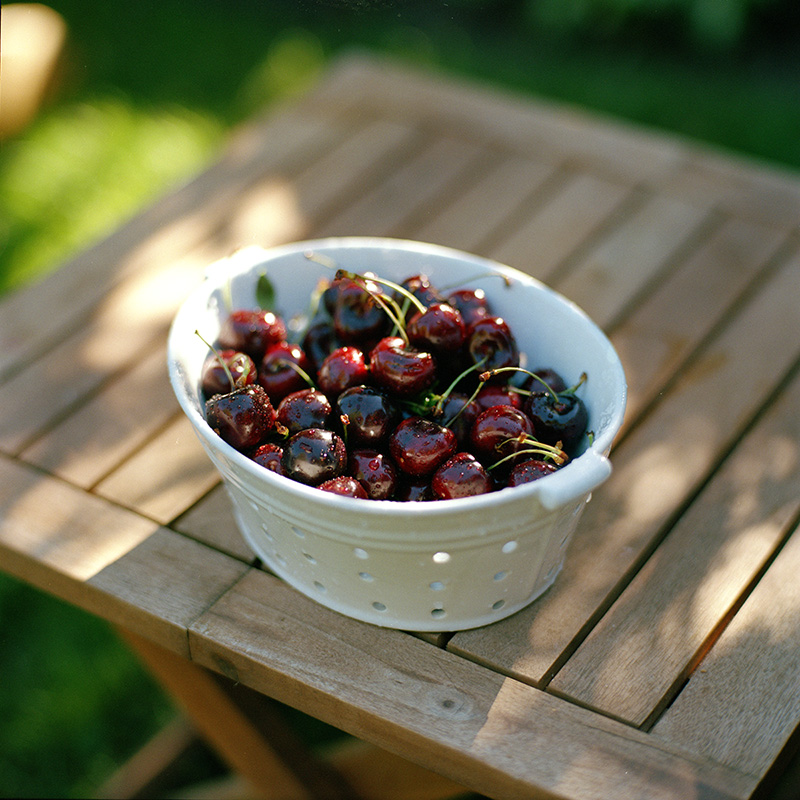
Bowl of fresh cherries.
Soooo looking forward to having a few of these next month .

I eat these things like popcorn. Aside from stained fingers, there is little downside to enjoying a few cherries. You get to spit out seeds across the backyard, they taste great, you can look them over pretty carefully so you don’t end up with one that might be a bit, uh, off…

But there’s more: They are generally the first fruit that comes out in my neck of the woods. There is something I just love about the concept of local fresh fruit – as opposed to wooden strawberries from some spot several time zones away – and, of course, they’re tremendously photogenic.

Getting a bit existential for a moment, does a bowl of cherries signify anything more than just a great snack? I can’t think of anything biblical regarding cherries, and they certainly haven’t been involved as a flashpoint for any international conflicts, as far as I remember. They also didn’t kick over a lantern and burn down a city.

And yet I can’t help that in eating these guys there is something I should feel guilty about – further to yesterday’s comments on the article that suggested that telling everyone how great your sourdough bread is is actually a form of snobbishness and social exclusion.

I don’t want to exclude anyone. I want to eat my cherries. Is it possible to strip politics out of writing about food? I’m not sure it is.

In the Saturday Globe and Mail, Mark Kingwell wrote an article about how the bread making craze is a way for snobbery to manifest itself. I’m not entirely sure I’m getting this right. I have read the article many times but it’s a bit above me. And I have a degree in Art History. And I read all the time.

Basically, Kingwell sees the creation of all these sourdough loafs that are immortalized on social media as a manifestation of the snob class.

He says:

To be clear, I”m not really interested in the bread part of this equation. I have eaten bread from bakeries large and small, and also baked bread myself sometimes and eaten that. Bread is a great human achievement, sure. But like every aspect of everyday life it is also a pwn in a larger chess game of status.

Ok.

I guess.

He also says:

Well, go ahead and bake bread. But your homemade toast is a boast, and the food posts are a judgement, a declaration of authenticity. Also – here’s the kicker – so is the act of claiming that they aren’t. In fact, that last move is the ultimate attempt to leapfrog into meta-boasting and meta-judging.

Uh. What is meta-boasting? You know you’re in trouble with words like that when Duck Duck Go returns travel in Meta, Italy as the first response to that search query. And you’re in even deeper trouble if this article itself is the first non-Italian option as to what meta-boasting is.

I struggle with academic articles like this because I’m not entirely sure I’m being told off, but I do get the distinct impression that by sharing my bread photos I’m one of those nauseating, smug, baker-people. Judgemental and snobbish.

Here’s my take. I like bread. A lot. I think the whole notion of baking bread is brilliant, and I want to share. I especially want to share my successes, but I’m happy to share my failures, too. (although those last couple of loafs of sandwich bread will never see the light of day as long as I’m alive. God, those were awful.)

I get frustrated when I’m told that when I’m saying, “Hey, this worked!! Who knew?” I’m actually virtue signalling in some way. Not to rain on anyone’s parade, but I just don’t think so.

If I am, I apologize. And I plead by case by offering my usual defence: Cluelessness. I apologize if I’m being obnoxious, but I need someone to be a little more specific than this to guide me to being a better person. (Oh, the irony).

I comfort myself by knowing that when I tried to make a sourdough starter it was a dismal failure. The bread I bake is currently with yeast only. So, technically, given that Kingwell was talking about sourdough bread, I’m free to do as I please.

I’ll try sourdough again in a little while. When this all blows over.

Used to describe an anecdote about my grandfather enjoying his after-lunch snack of ice cream and canned peaches.
No Koi were harmed in the making of this blog post.

I saw this image and it, strangely, reminded me of my grandfather. That shouldn’t come as a surprise in its own, but what it did was bring me back to 40 years (or so) ago with the family sitting in my grandparent’s backyard having a bit of dessert after lunch.

It was a small bowl of vanilla ice cream and some canned peaches.

My grandfather looked and said, “Oh, goldfish. I like goldfish.”

I was horrified. And then I figured out the joke. He was a simple man, my grandfather, but he did like a few things that I can remember: boiled eggs in an egg cup, almond chicken at the local Chinese restaurant, a decent cup of tea…

And, of course, goldfish.

Lunch at the lake

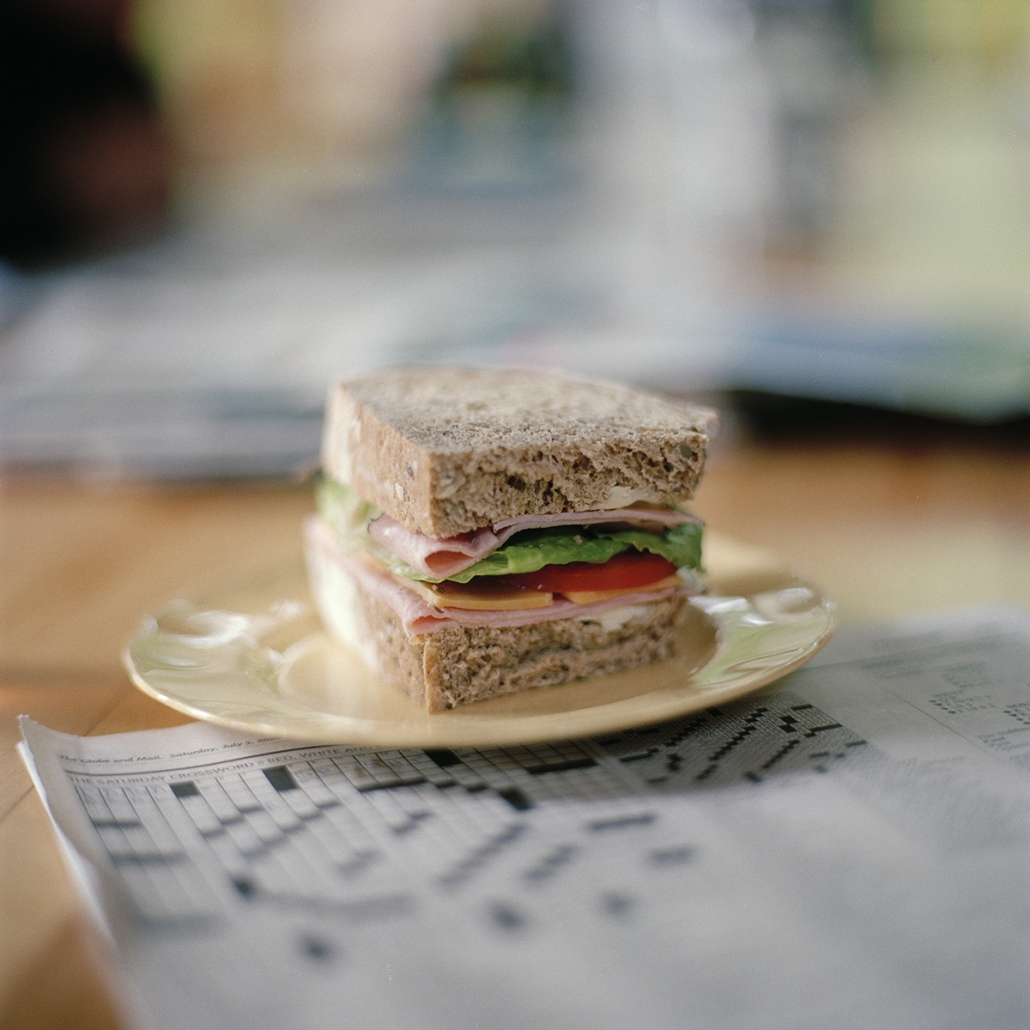
I do love this photo. The sandwich was pretty good, as well. Question: Does a piece of food taste better because of where you eat it (in this case my in-law’s property on Christina Lake in British Columbia) or taste better because of what you eat it off of? (In this case, a vintage plate that was made, as my mother would say, “When God was a little boy.”)

Difficult to say. I know the crossword added to the enjoyment, as did the fact that I could eat it while wearing a damp pair of swimming trunks.

How do non-food factors influence how we enjoy (or not enjoy) the food we eat? Would this sandwich taste the same if it were eaten in a rush in the front seat of a car in a January rainstorm?

The ‘perfect’ amount of ground espresso – in this case, 18 grams. If only it were right in the middle of the portafilter. *sigh*

I’m still struggling to figure out all the commands in WordPress. Half of the time I get to a spot and have no idea how I got there and, more importantly, no idea how to get back. Stupid program. Why can’t they just make it for my way of thinking? Sheesh.

This is my second post about coffee. I wanted to write something clever about the ‘magic elixir’ or how amazing coffee is. I did write a bunch but it was so hard to figure out the drafts and the revisions I just had to give up and start again.

Right. Where was I? Coffee!

I’ll admit, I really like it, but it has occurred to me that the actual process of making an espresso adds a lot to my enjoyment of the drink. This may be a theme in my life that I’ll possibly explore ad nauseum in days to come, but for the time being, coffee is as much for me about the process as it is about the drink itself.

Perhaps that’s not quite accurate. Coffee is a really fickle pickle, to use a technical term. When people talk about the process they go though when making a cup of joe, coffee is one of the very few food items that demands that level of attention and respect and will reward you for being diligent and careful. Like baking pastries, careful counts.

Many years ago I bought a Rancilio Silvia espresso maker. I used it every day for 7 years and it taught me a ton about coffee. Careful pays off. A grinder is worth the money (to a point). When I moved from the Baratza Virtuoso that wore out after 6 years I switched to the Eureka Silencio. The improvement in the coffee was immediate. I was amazed. All of a sudden I understood why people would blow $1500 on a grinder.

I upgraded to a Rocket not that long ago, but that has more to do with my magpie nature (can’t resist shiny things) and my ability to rationalize many mechanical things (I am a photographer, after all) than it does with coffee.

Besides, getting a great shot out of the Silvia is way harder than the Rocket. The Silvia is a pretty badass machine.

But where I’m trying to go is to say that some things about coffee really matter: The beans, how fresh the grind is, quality of the water as well as the temperature of it will make a big difference in your coffee experience.

If you’re brewing espresso, the amount of coffee in the portafilter (in grams – get yourself a scale – you’ll need it in the kitchen, anyway) how hard you tamp the coffee and how long you run it through the machine also make a big difference in the extraction. The key is 2oz (60ml) of coffee in 25 seconds at the right temperature. Apparently a single-shot portafilter is for people more adept than I.

Naked (bottomless) portafilters, weighing the coffee once it has brewed and snippy comments directed at people who like to drink their coffee with sugar and have it to go are listed under the heading of ‘smoke ’em if you got ’em’.

Although I will admit that the reason why I hate naked portafilters so much is because your espresso technique is shredded by those things. I don’t mind having my inadequacies gently pointed out. I’m not a fan of them making a mess of my clothes.

I have Jim Lahey’s book, My Bread as well as Apollonia Poilâne’s book, Poilâne. They are filled with all manner of recipes on how to make bread. Lahey has a bakery in New York; Poilane ships bread all over the planet from France, where they produce it.

My mother made bread every week for years. 8 loaves a week. It was a mixed white/whole wheat loaf, with lots of kneading and a very specific ‘route march’ as she would say. I grew up on it. It was great. But I’m not sure I can ask her for direction on making bread. I’m not sure why. Perhaps I just need to figure it out for myself. Perhaps I know better. I don’t know.

My grandmother was never good at bread. It’s a strange thing to say, given that I would have happily taken a bullet for her. She survived so much – Her name was Frances May Chambers. When she was born, her father was in France, and he was supposed to be home for May. Enough said. The story was that she couldn’t make bread well because she could make great pastry, and the techniques for good pastry (gentle, calm) didn’t translate well into bread (knead, aggressive).

I like to think I’m more like my grandmother than my mother when it comes to baking, and the reason why I struggle with bread is because I excel at pastry. Which is true, except for that last part. My pastry needs work, too. Lots of work.

My pizza dough sometimes works; other times it doesn’t. I use Beddia’s recipe from his book, Pizza Camp. It’s an overnight dough you raise in the fridge. And it’s always at least OK, but it’s rarely great. I have to take it out to rise on the counter for several hours, and I tend to use more yeast than what is called for. When it works, it’s great. But often it’s just… OK. My no-knead bread is coming along, but sourdough starter was a total failure and my most recent sandwich loaf was greeted with the reminder that I have other strengths.

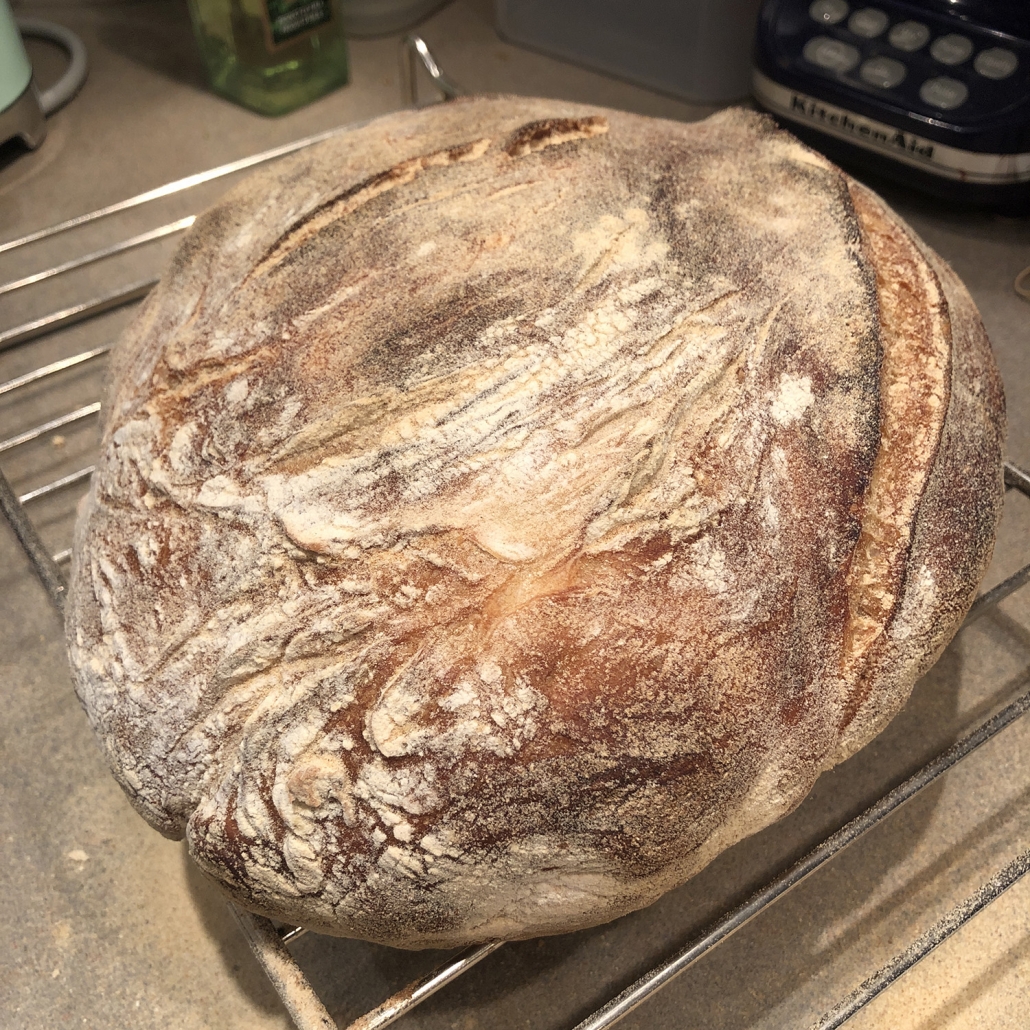
A loaf that actually worked out all right.

Maybe I should talk to mom about bread. Couldn’t hurt.

A few years ago we went for dinner at a local restaurant – lovely spot. I had a dozen kussi oysters all to myself. Strangely, my wife and kids weren’t interested. But to the title of this post, there was this shallot mignonette that was so tasty and what was amazing about it was how finely the shallot was chopped. We did a salad for lunch today and in the making of the dressing I was reminded – I need to chop my shallot more finely. It was too chunky by half.

So, this is all new to me. I wanted to just click a few things and start writing, but obvouisly that’s just not going to happen right away. Testing, testing…